Indian educational institutions have become the latest focal point for a growing protest movement that employs unconventional symbolism to express dissent. The movement, which has adopted the 'cockroach' metaphor, represents a broader conversation about the role of politics in education and the autonomy of academic institutions across the country.
Origins of the Symbolic Protest
The cockroach symbol has been adopted by student activists as a representation of resilience and persistence. Much like the insect itself, protesters view their movement as something that cannot be easily suppressed or eliminated. This creative approach to activism draws from a long tradition of symbolic protest in India, where metaphors and visual imagery have historically played important roles in political movements.
The choice of this particular symbol also carries deeper meaning. Cockroaches are known for their ability to survive in adverse conditions and their resistance to attempts at eradication. Student activists have embraced these characteristics as representative of their determination to maintain their voice in educational policy discussions.
Educational Institutions as Political Battlegrounds
Several factors have contributed to schools and universities becoming centers of political activism:
- Changes in curriculum content and textbook revisions that some educators view as politically motivated
- Debates over the autonomy of educational institutions and their governance structures
- Concerns about academic freedom and the ability of teachers to present diverse perspectives
- Discussions surrounding the National Education Policy and its implementation
- Questions about funding priorities and resource allocation in public education
Educational spaces have historically served as incubators for political thought and activism in India. From the independence movement to contemporary social causes, students and teachers have often been at the forefront of demanding change and accountability from government institutions.
The Current Landscape of Student Activism
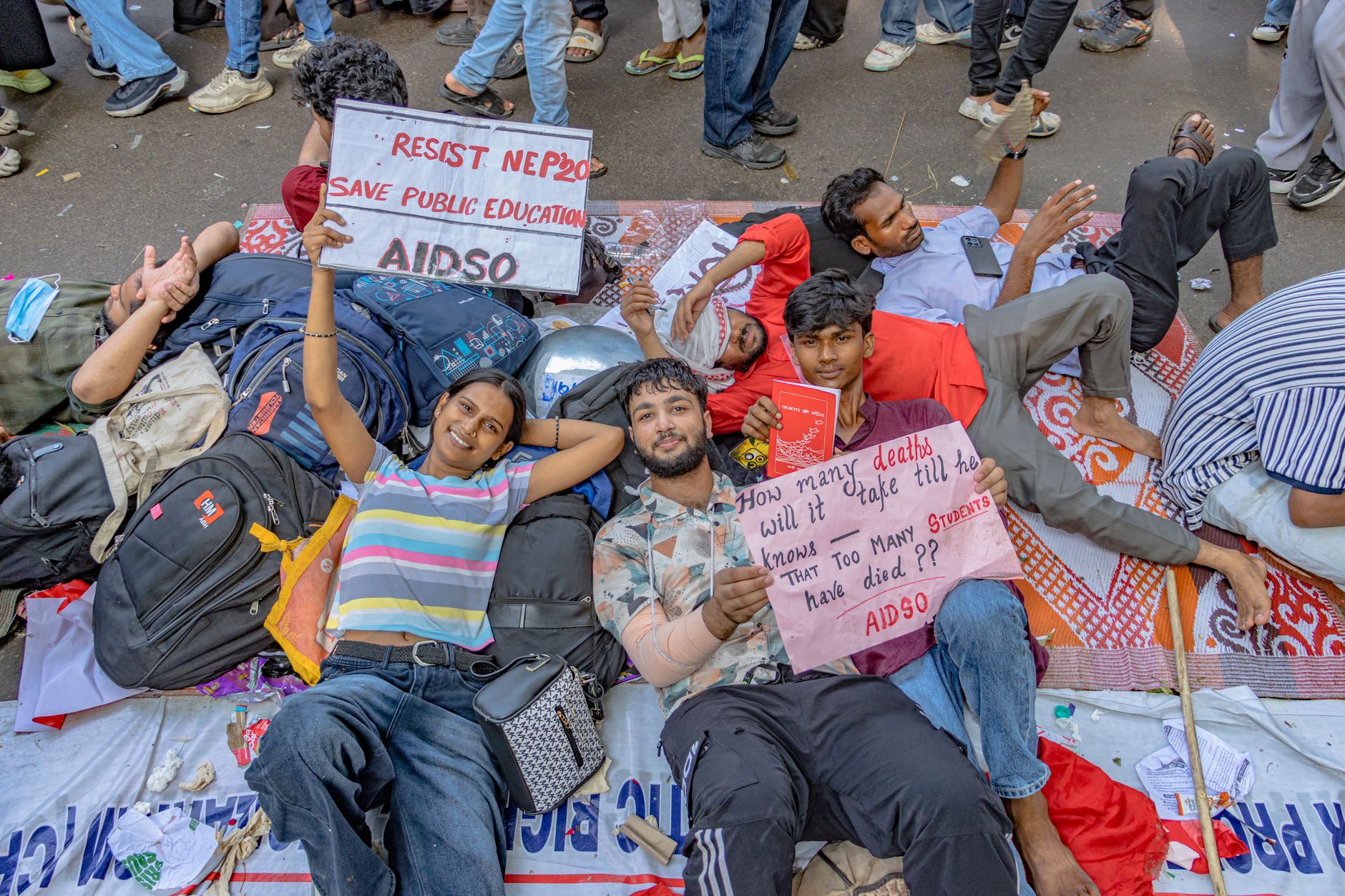
Student protests in India have evolved significantly in recent years. Rather than traditional demonstrations alone, activists now employ social media campaigns, symbolic gestures, and creative expression to amplify their messages. The cockroach movement represents this newer form of protest—one that relies on viral symbolism and shared meaning across digital platforms.
Universities such as Jawaharlal Nehru University, Jamia Millia Islamia, and various other institutions have witnessed sustained student activism over recent years. These movements have addressed issues ranging from fee hikes and admission policies to broader questions about the direction of Indian democracy and civil liberties.
Government Policies and Educational Reform
The Modi government has pursued significant reforms in the education sector since coming to power. The National Education Policy 2020 represents the most comprehensive overhaul of India's education framework in decades, introducing changes from primary education through higher education and research institutions.
Supporters of these reforms argue they modernize outdated structures, promote vocational training, and make education more aligned with contemporary economic needs. The policy emphasizes multidisciplinary learning, flexibility in course selection, and the integration of technology in teaching.
Critics, however, raise concerns about several aspects of educational policy changes. These include worries about the centralization of educational governance, potential marginalization of regional languages and cultures, and what some perceive as an emphasis on particular historical narratives over others.
Impact on Teaching and Learning Environments
The politicization of educational spaces creates complex challenges for both educators and students. Teachers may feel constrained in their ability to encourage critical thinking or present multiple perspectives on controversial topics. Students may experience pressure regarding what they can discuss or debate within campus environments.
Academic institutions function optimally when they serve as spaces for open inquiry, rigorous debate, and the free exchange of ideas. When political considerations enter the classroom, there is legitimate concern about whether this fundamental mission can be preserved.
Looking Ahead
The emergence of movements like the cockroach protests signals that questions about education policy, academic freedom, and institutional autonomy will continue to generate public debate. As India's young population grows and education becomes increasingly central to economic mobility and social development, these issues are likely to remain prominent.
Educational institutions will need to navigate the balance between accountability to public interest and the preservation of academic independence. Students, teachers, policymakers, and civil society all have stakes in ensuring that schools and universities can fulfill their essential role in developing informed, critically-thinking citizens.
The resolution of these tensions will shape not only the future of Indian education but also the broader democratic culture of one of the world's largest nations.