When India's Right to Education (RTE) Act came into force in 2010, it was hailed as a landmark legislation that would transform the educational landscape for millions of children. The Act made education a fundamental right for every child between the ages of six and fourteen. However, more than a decade later, the implementation reveals a troubling reality: the standards set by the RTE Act represent such a bare minimum that they fail to ensure meaningful educational outcomes for India's most vulnerable students.
The Promise and the Reality
The RTE Act mandated several provisions including free and compulsory education, specific pupil-teacher ratios, infrastructure requirements, and quality norms. On paper, these seemed comprehensive. In practice, however, the standards were set so low that merely meeting them does not translate into quality education.
For instance, the Act requires schools to have one teacher per 30 students in primary classes and one per 35 students in upper primary. While this sounds reasonable, rural schools often struggle even to meet this basic requirement. More critically, the Act says nothing about teacher training quality, pedagogical methods, or learning outcomes. A school can be fully RTE-compliant while producing students who cannot read grade-appropriate texts or perform basic mathematics.
Infrastructure: A Floor That Became a Ceiling
The infrastructure norms under the RTE Act specify requirements like all-weather school buildings, at least one classroom per teacher, separate toilets for boys and girls, a kitchen for mid-day meals, and a playground. These are essential provisions, but they represent the absolute minimum any school should have.
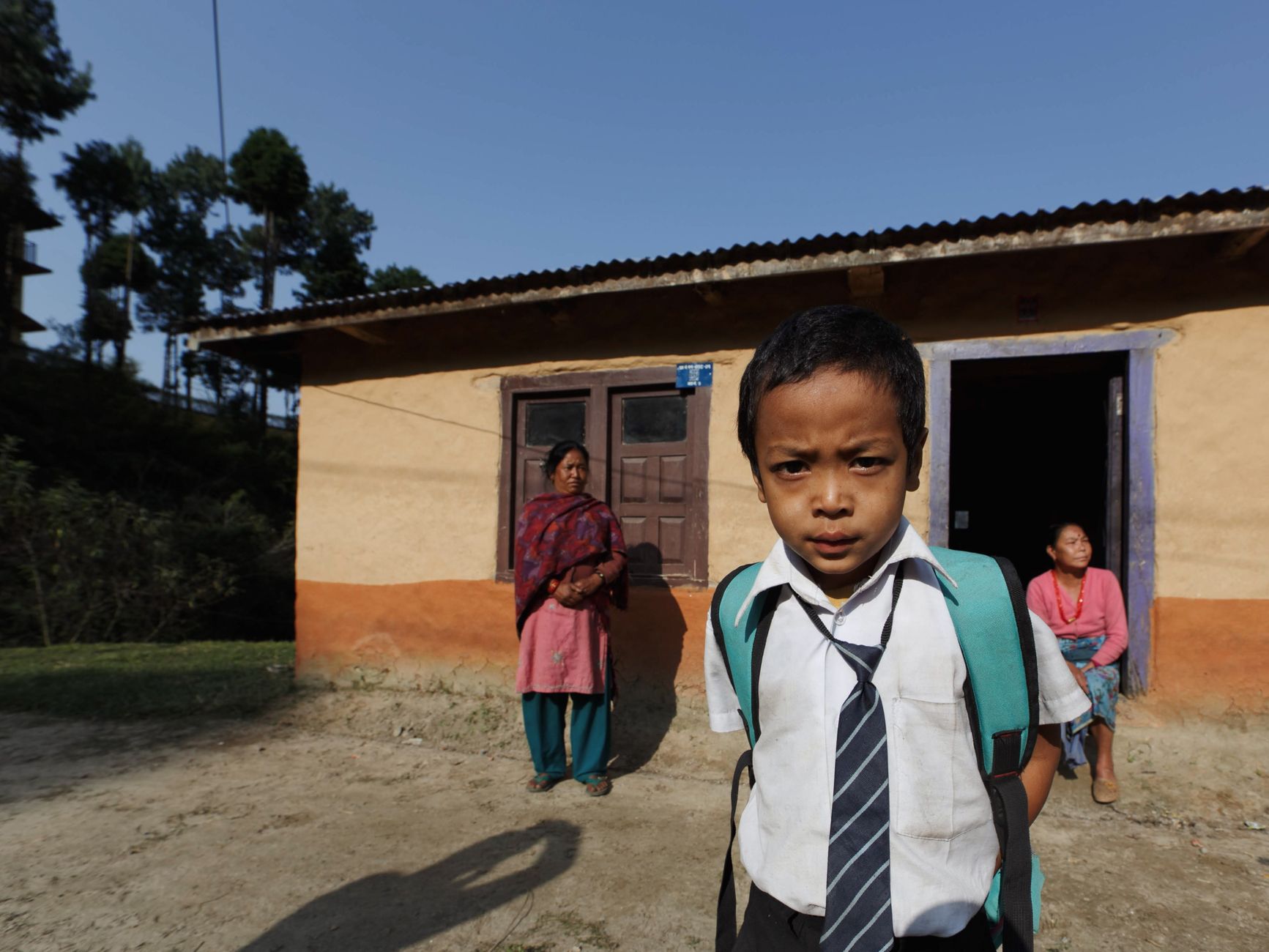
For marginalized communities—including Dalit, Adivasi, and minority children—these bare minimum standards often become the ceiling rather than the floor. Schools in their neighborhoods rarely exceed RTE requirements because there is no incentive or mandate to do so. Meanwhile, private schools catering to middle-class and wealthy families offer libraries, computer labs, sports facilities, and extracurricular activities that remain distant dreams for vulnerable students.
The Quality Gap
Perhaps the most significant failure of the RTE Act is its silence on learning outcomes. The Act focuses heavily on inputs—infrastructure, teacher presence, and enrollment—but provides no measurable standards for what children should actually learn. This input-based approach means schools can be deemed successful simply for existing, not for educating.
National achievement surveys have consistently shown that large percentages of students in government schools cannot read simple texts or solve basic arithmetic problems appropriate to their grade level. Children from economically weaker sections and disadvantaged groups perform even worse. The RTE Act's framework does nothing to address this learning crisis because it never set ambitious educational standards in the first place.
The 25 Percent Quota: Good Intentions, Mixed Results
The RTE Act's provision requiring private schools to reserve 25 percent of entry-level seats for economically weaker sections (EWS) and disadvantaged groups was meant to promote inclusion. However, implementation has been patchy, with many private schools finding ways to circumvent the rule or segregating EWS students within their premises.
Moreover, this provision inadvertently suggests that government schools are inadequate for quality education, reinforcing a two-tier system rather than addressing the fundamental problems with public education infrastructure and quality.
The Teacher Training Challenge
The Act mandates certain teacher qualifications but provides limited guidance on ongoing professional development or pedagogical training for diverse classrooms. Teachers in schools serving vulnerable populations often face the most challenging conditions—multilingual classrooms, students with varying levels of preparedness, and limited parental support—yet receive the least specialized training to handle these complexities.
Moving Beyond the Minimum
India's most vulnerable students do not need the bare minimum; they need exceptional support to overcome the disadvantages they face outside school. This requires reimagining educational standards that go beyond physical infrastructure to include:
- Learning outcome benchmarks tied to grade levels
- Specialized teacher training for socio-economically diverse classrooms
- Additional academic support systems for first-generation learners
- Cultural and linguistic inclusivity in curriculum and pedagogy
- Mental health and counseling support
- Robust accountability mechanisms that measure actual learning
The RTE Act was a crucial first step in recognizing education as a right. However, ensuring that right becomes meaningful requires setting standards that are aspirational, not minimal. Until the framework evolves beyond bare-bones requirements, India's most vulnerable students will continue to receive an education that is free in name but inadequate in substance, perpetuating rather than breaking cycles of disadvantage.
This article is for general informational purposes only and represents an analysis of education policy. Readers should consult education experts and official government resources for specific information about RTE Act provisions and implementation in their regions.