India's ancient education systems are often romanticized as golden ages of learning and scholarship. Political leaders and cultural commentators frequently invoke gurukuls, the university of Nalanda, and traditional madrasas as evidence of the country's illustrious educational past. However, a closer examination of historical records reveals a more complex and less inclusive reality.
The Gurukul System: Education for the Few
The gurukul system, which flourished during the Vedic period and continued in various forms for centuries, was fundamentally exclusive. These residential schools, typically run by Brahmin teachers, primarily served upper-caste males. The curriculum focused on Vedic texts, philosophy, astronomy, and other subjects deemed appropriate for the twice-born castes.
Shudras, who comprised a significant portion of the population, were systematically denied access to Vedic education. Women, regardless of caste, faced similar exclusions in most periods of Indian history. While exceptions existed—some texts mention learned women like Gargi and Maitreyi—these were rare outliers rather than indicators of widespread female education.
The very structure of gurukuls reinforced social hierarchies. Students lived with their guru, often performing household tasks as part of their education. This arrangement required families who could spare their sons' labor for years, effectively limiting participation to those with economic means.
Nalanda: A University for Scholars, Not the Masses
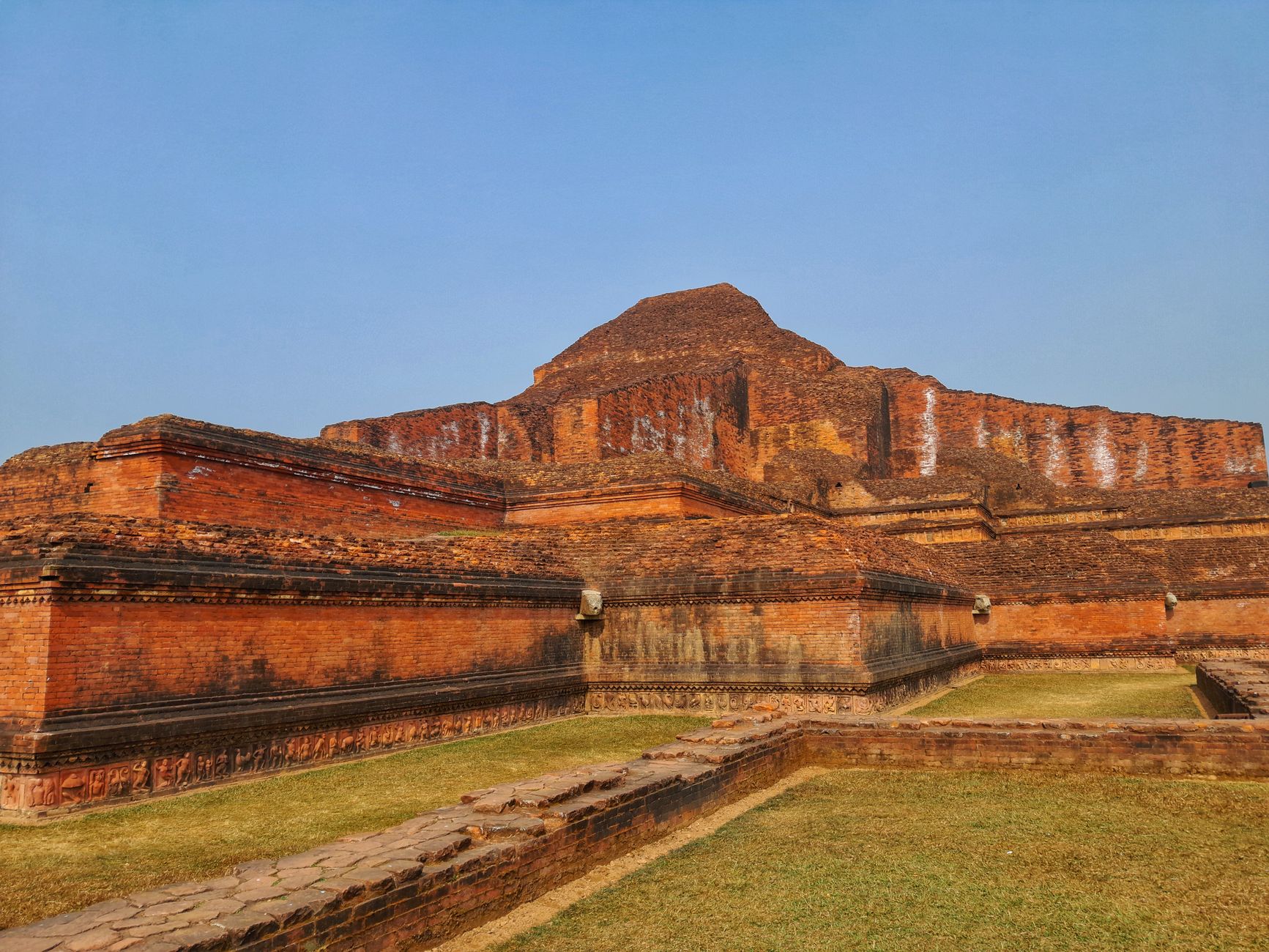
Nalanda University, which operated from approximately the 5th to 12th centuries CE, represents one of ancient India's most celebrated educational achievements. At its peak, it attracted scholars from across Asia and housed thousands of students studying Buddhism, philosophy, medicine, and logic.
However, Nalanda was never conceived as an institution for mass education. It was a highly selective center of advanced learning. Admission required passing rigorous examinations, and the language of instruction was primarily Sanskrit and Pali—languages inaccessible to ordinary people. The university catered to Buddhist monks and serious scholars, many from privileged backgrounds or sponsored by royal patronage.
The very existence of Nalanda, while impressive, highlights the absence of widespread basic education. There was no parallel system ensuring that common people—farmers, artisans, laborers—received even fundamental literacy and numeracy skills.
Madrasas: Religious Education with Limited Scope
Traditional Islamic madrasas in India, established after the arrival of Muslim rule, provided education centered on Quran, Hadith, Islamic jurisprudence, and Arabic. While theoretically more accessible than gurukuls—Islam's egalitarian principles meant no caste-based restrictions—madrasas primarily served boys from Muslim communities.
These institutions focused on religious education rather than providing broad-based literacy or vocational training. Moreover, girls were largely excluded, and non-Muslims had no access. Like gurukuls, madrasas required students to dedicate years to study, making them accessible primarily to families who could afford to forgo their children's economic contributions.
The Reality of Mass Illiteracy
Historical evidence suggests that literacy rates in pre-colonial India were extremely low, likely in single digits for the overall population. The celebrated institutions of learning coexisted with widespread ignorance and illiteracy among the masses.
Traditional education systems were not designed to be universal. They served specific purposes: preserving sacred texts, training religious leaders, educating administrators, and maintaining existing social structures. The concept of universal basic education—that every child should learn to read, write, and perform basic arithmetic—is a relatively modern idea that emerged during the Enlightenment and spread globally in the 19th and 20th centuries.
Caste and Gender Barriers
The most significant barriers to universal education in traditional India were caste and gender hierarchies. Knowledge was considered powerful and potentially dangerous if possessed by the "wrong" people. Laws and social customs actively prevented lower castes and women from accessing education.
Some vocational knowledge was transmitted through family-based apprenticeships in artisan and merchant communities, but this was specialized training, not broad-based education. The vast majority of agricultural laborers received no formal education whatsoever.
Lessons for Contemporary Debates
Understanding the exclusive nature of traditional Indian education systems is crucial for contemporary policy discussions. While India's ancient institutions made remarkable contributions to mathematics, astronomy, medicine, and philosophy, they cannot serve as models for inclusive, universal education.
Modern India's constitutional commitment to universal education represents a significant departure from traditional practices. The Right to Education Act and efforts to achieve universal literacy are attempting to accomplish something unprecedented in Indian history: education for everyone, regardless of caste, religion, gender, or economic status.
Acknowledging historical limitations does not diminish genuine achievements of the past. Rather, it provides realistic perspective and highlights how far contemporary India has come—and how much further it needs to go—in democratizing access to knowledge.